
Defence, security & critical infrastructure
See drones in the last kilometre, before they reach you.
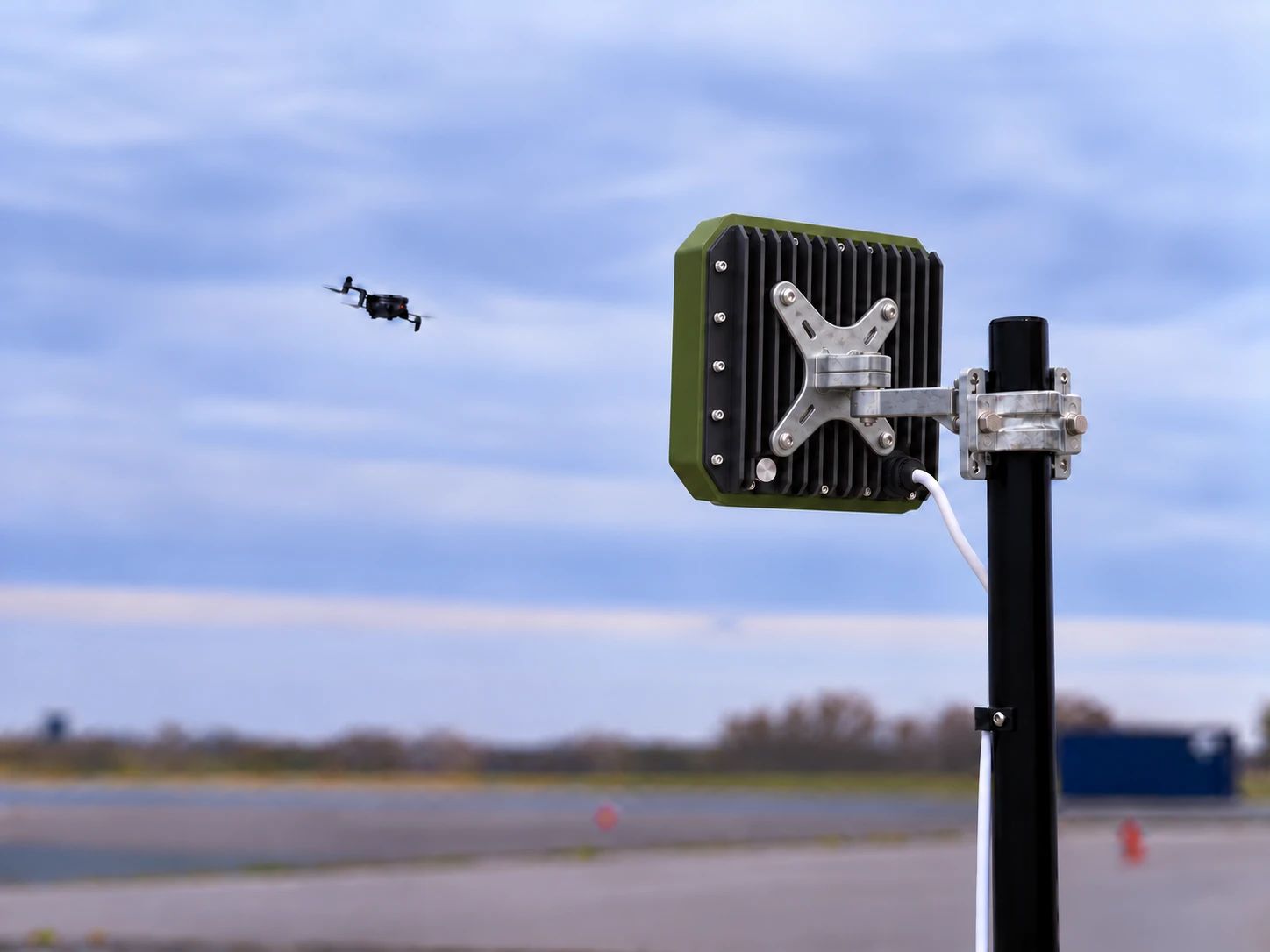
Compact radar for the tactical layer of counter-UAS. Dopplium Vigia detects, tracks and classifies small drones, including RF-silent ones, and hands confirmed 3D tracks to your C2 and effectors.
Built for
- Defence & military sites
- C-UAS integrators
- Critical infrastructure
- Airports
The challenge
Small drones arrive low, close and often silent. Most units have no early warning.
Cheap drones, close in
Low-cost FPV and commercial drones now reach squad level and the fence line, where there is little time to react.
RF sensors miss some drones
RF detectors listen for a control link. Fibre-optic and pre-programmed drones transmit nothing they can hear.
Long-range radars are too few
Large surveillance radars cover wide areas, but there are not enough of them to put one at every unit, site and vehicle.
Multi-layered defence
Counter-UAS is multi-layered. The tactical layer is ours.
The model behind the European Drone Defence Initiative and NATO's Layered C-UAS Initiative: long-range radars watch beyond 10 km, medium-range sensors from 2 to 5 km, and effectors act within 200 m. Dopplium Vigia fills the gap in between, up to about 1 km.
Our role in the chain
- DetectEven RF-silent, fibre-optic drones
- Track3D tracks, three times per second
- IdentifyAI classification: drone or bird
- DefeatHand-off to your C2 and effectors
> 10 kmLong-range radar
2–5 kmMedium-range
≤ 1 km · tacticalDopplium Vigia
Hand-off
We detect, track and identify. Your C2 and effectors decide and act.
Dopplium Vigia does not replace your counter-UAS system; it feeds it. Its 3D tracks go into your C2 and effectors through an open, standardised API.
- Dopplium VigiaDetects and tracks the drone in the tactical layer and classifies it.
- 3D tracks via APIConfirmed track trajectories leave the radar through a standardised API.
- Your C2Your command-and-control system fuses the tracks with your other sensors.
- Your effectorsJammers, interceptors or other effectors act on the cue you decide.
Recommended solution
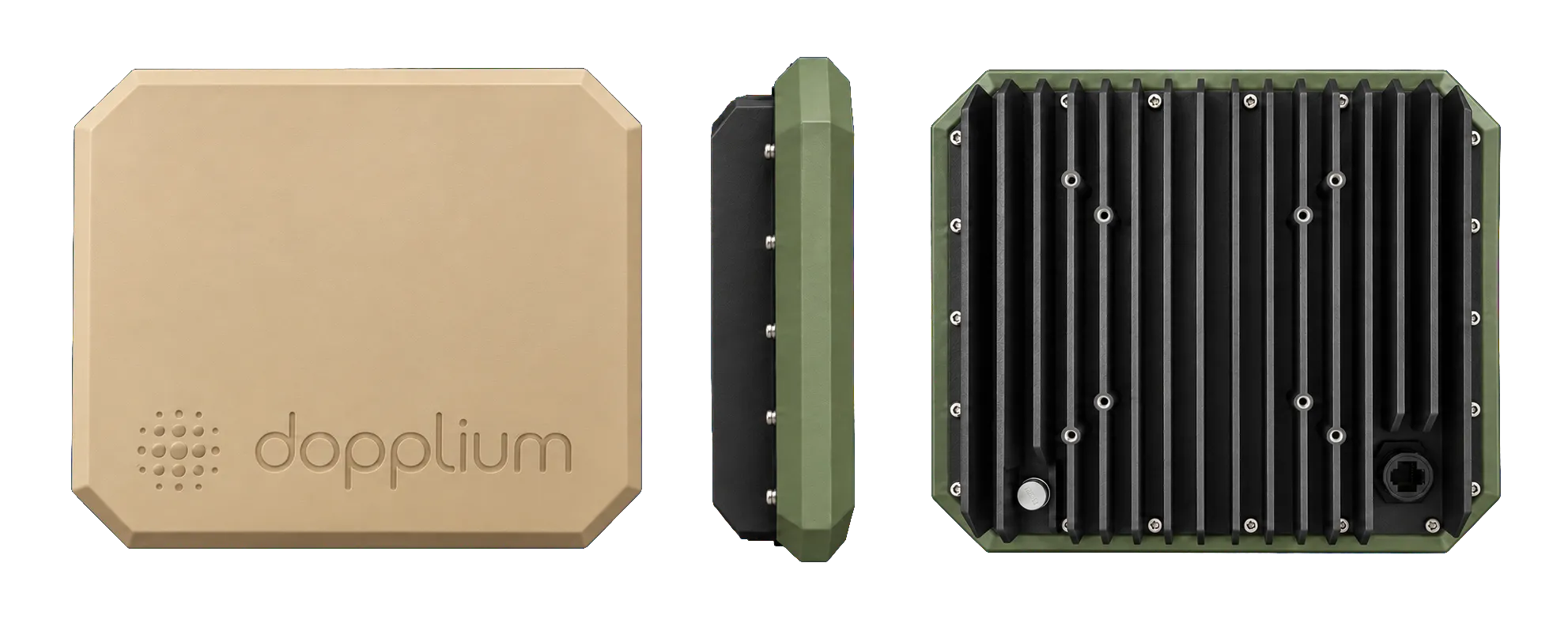
Dopplium Vigia
Early detection for emerging drone threats.
- 500 m detection range for C1/C2-class drones
- 90° × 45° field of view per unit
- 40 W via PoE: a single cable to each unit
- Standard VESA 100 mounting on masts, walls or tripods
- Day and night, in low visibility and adverse weather
FAQ
Questions from integrators and operators
Does Dopplium Vigia take drones down?
No. Vigia detects, tracks and classifies. It hands confirmed 3D tracks to your C2 and effectors, which make the decision and act.
Can it see drones that do not transmit?
Yes. Radar detects the drone itself, not its radio link, so RF-silent and fibre-optic drones are seen as well.
How far does it see?
The datasheet gives 500 m for C1/C2-class drones; actual range depends on the drone and the conditions. Vigia is built for the tactical layer, up to about 1 km, beneath long- and medium-range radars.
How does it connect to our systems?
Each unit runs on a single PoE cable and sends confirmed tracks through a standardised API. A web dashboard is included for monitoring, diagnostics and updates.
Building a counter-UAS system or protecting a site?
Tell us about the site, the threat and the C2 you run. We will show you what Vigia tracks and how it hands over.